What should a coordinator do when high school students want volunteer hours for a graduation requirement?
Service hour students arrive in waves, on a deadline, and often with no volunteering experience at all. A short written policy, paired shifts, and same-day attendance records turn that pressure into a workable part of your roster.
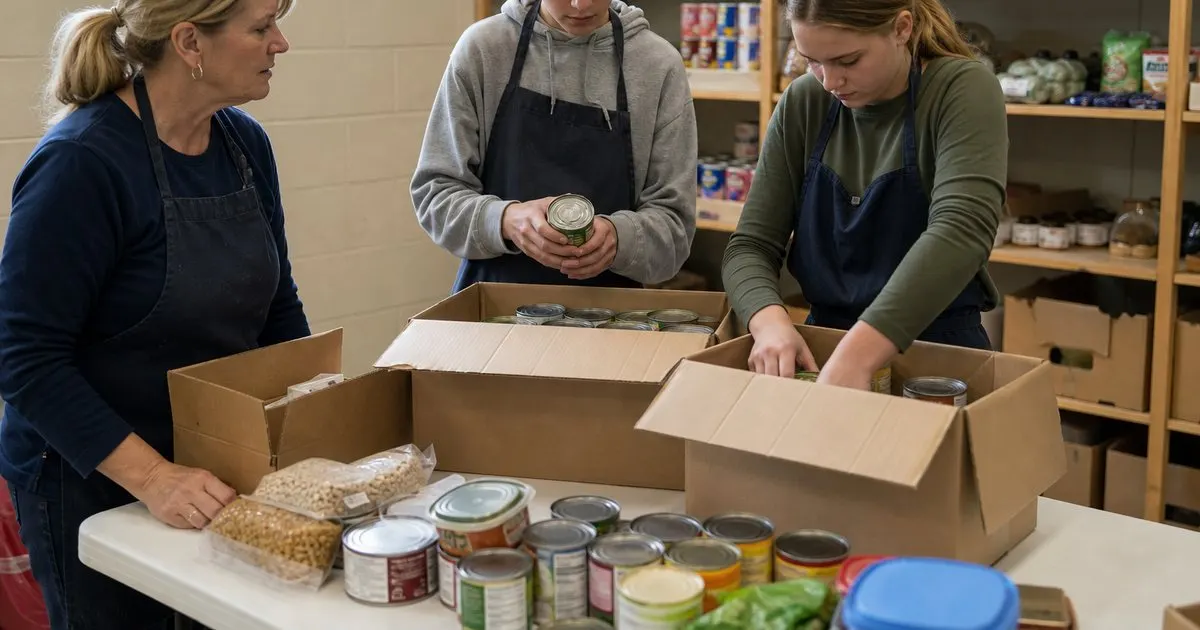
Service hour volunteers arrive on a deadline, not a mission
Most volunteers show up because they care about the work. Students working toward a graduation requirement usually show up because a form is due, and that difference shapes everything about how you schedule them. The interest is often genuine, but it is bounded by a number of hours and a date on a school calendar. Expect requests to cluster in the weeks before a semester closes, expect parents to be the ones actually asking about times, and expect a lot of first-time volunteers who have never worked a shift of any kind.
None of that makes them bad volunteers. It does mean the usual recruiting logic runs backward. Instead of persuading someone to give you time, you are managing more demand than your program can absorb, at the exact moment your regular calendar is already full. A coordinator who treats service hour requests as ordinary sign-ups ends up with eleven teenagers at a station built for four, no supervisor free to explain the work, and a stack of verification requests arriving by text at ten at night. Related: When does setting up recurring volunteer shifts make more sense than posting each one?
Keep reading: Why does coordinating volunteers through group texts fall apart as an organization grows?, How can a nonprofit fill last-minute volunteer shift gaps before an event begins?, What is the most effective way to reduce volunteer no-shows for scheduled shifts?. See how HelperRoster helps you volunteer shift scheduling and rosters.
Write the policy once, before the first request arrives
The single biggest time saver here is a short written policy you can send as a link. It should answer the questions every family asks: the minimum age for each type of role, whether a parent or guardian signature is required, whether an adult needs to stay on site, how far in advance a shift has to be booked, and what a student should wear or bring. Ten sentences is usually enough. The point is that you answer each question one time instead of fifty times over email.
Two decisions save the most friction later. First, decide what actually counts toward hours. Orientation, travel time, and the fifteen minutes spent waiting for a ride are the usual gray areas, and it is far easier to state your rule in advance than to negotiate it afterward. Second, decide your verification turnaround, something like five business days, and say so plainly. Families almost always accept a clear timeline. What they cannot plan around is silence when a form is due Friday.
Design shifts a fifteen year old can succeed at
A first shift should be short, concrete, and paired. Two to three hours is usually the sweet spot, long enough to be worth the trip and short enough that attention holds. Give the task a visible finish line: this pallet gets sorted, these forty bags get packed, this row gets weeded. Vague instructions like help out wherever needed are hard for any new volunteer and nearly impossible for a teenager who does not yet know what needs doing or who to ask. Related: How should a nonprofit track volunteer hours accurately for grant reports and thank-yous?
Pair every student with an experienced volunteer or a shift lead rather than assigning them to a station alone. Keep the ratio honest: one adult who is genuinely free to answer questions for every four or five newcomers, and fewer if the task involves equipment, food handling, or contact with the people you serve. Schedule around school reality too. Weekday shifts starting before four in the afternoon will collect cancellations, and a Saturday morning slot will usually fill faster than anything you can offer midweek. Related: How can a nonprofit fill last-minute volunteer shift gaps before an event begins?
Handle verification the day of, not the week after
Capture hours while the shift is still happening. A sign-in and sign-out at the check-in table, recorded by the shift lead the same afternoon, takes seconds and removes every later argument about whether someone stayed until three or three thirty. Reconstructing attendance from memory a month later is where coordinators lose whole evenings, and it is also where honest mistakes creep into a document that a school is treating as official.
Then standardize the output. Keep one short letter template with the organization name, the dates and hours worked, the role, and a named signer, and decide who that signer is so requests do not bounce around the staff. If your scheduling system already stores attendance, exporting hours per volunteer becomes a two minute job instead of an archaeology project. Keep a copy of every verification you issue, because the request to resend one always comes, usually the week the form is due. Related: Why does coordinating volunteers through group texts fall apart as an organization grows?
- Service hour requests cluster near school deadlines, so plan capacity for the weeks before a semester ends.
- One short written policy on age, supervision, and what counts as hours prevents most repeat questions.
- Keep first shifts to two or three hours, with a clear finish line and an experienced volunteer alongside.
- Record attendance the day of the shift and issue verification from one template with one named signer.

Julien Jimenez
Julien Jimenez is an independent software builder based in Paris. He designs, ships, and operates focused SaaS products for small businesses and independent professionals. Read the full author page.
Fill Every Shift With Ease
Volunteer shift scheduling and rosters. HelperRoster is built to help you put this into practice.
Start free trialMore from the HelperRoster blog


How can a nonprofit fill last-minute volunteer shift gaps before an event begins?

What is the most effective way to reduce volunteer no-shows for scheduled shifts?
Get the HelperRoster playbook
Practical guides on volunteer coordination, straight to your inbox as we publish them. No spam, unsubscribe any time.